
Queenscliff Hotel: An Icon Restored
Designed by renowned Melbourne architects Reed, Henderson & Smart in 1887, Queenscliff Hotel (VHR H1141) was built during a time when coastal towns were developing into seaside resorts. The arrival of the railway in 1879, the corresponding influx of tourists in the region, and the booming Melbourne economy during the 1880s enabled the construction of a number of grand hotels in Queenscliff, including the Queenscliff Hotel – “the fourth large and commodious hotel constructed for the accommodation of visitors to this favourite watering place during the last few years”. (Geelong Advertiser, 12 October 1887, p4).

In the 1980s, the property gained new life under Mietta O’Donnell and Tony Knox, who established the acclaimed restaurant-hotel Mietta’s Queenscliff – a cultural and culinary institution known for both its contemporary hospitality and eclectic decoration.
rba architects had been involved in the project since 2018, although covid lockdowns and a change of ownership meant that conservation works didn’t commence until 2023, by which time parts of the building were in a precarious state, with leaking roofs, unstable verandahs, and vines growing up internal walls. The roof turret, described in 1887 as a promenade from which “the view obtainable is one of the most comprehensive and magnificent that could be desired” had been enclosed and converted into an impractical bedroom, with the original flagpole so attacked by coastal birds that it had been removed.
Recognising the opportunities the turret offered, rba advised removal of the non-original accretions and windows, returning the turret to its original design as a two level viewing platform.

Working with the specialist heritage contractors and architect, we developed a suitable flooring design based on Queenscliff’s boat-building history, and detailed the replacement roof, including second hand Welsh heather coloured slates with feature band in scalloped green slate, matching the original. The design of the replacement decorative leadwork was based on careful study of historic photographs and handbooks, and was installed by skilled traditional craftspeople.
During the roof replacement works, the lower part of the original flagpole was discovered still within the roof structure, and a local mast-maker was engaged to produce a replica upper section, which, given its size and the constraints of the site, was hoisted into location from below through the damaged floor, instead of being craned in from above.

The timber structural elements of the two storey verandah, which had been too unstable to stand on, were repaired and made structurally sound, and rotten and detaching the timber decorative ceilings and fascias were replaced to match the original design. Cast iron verandah posts and balustrades were in better condition, and were treated for corrosion, repainted to a sympathetic colour scheme based on analysis of samples of the historic paint layers, and reinstalled – allowing the verandah to be enjoyed by both guests and those walking past.

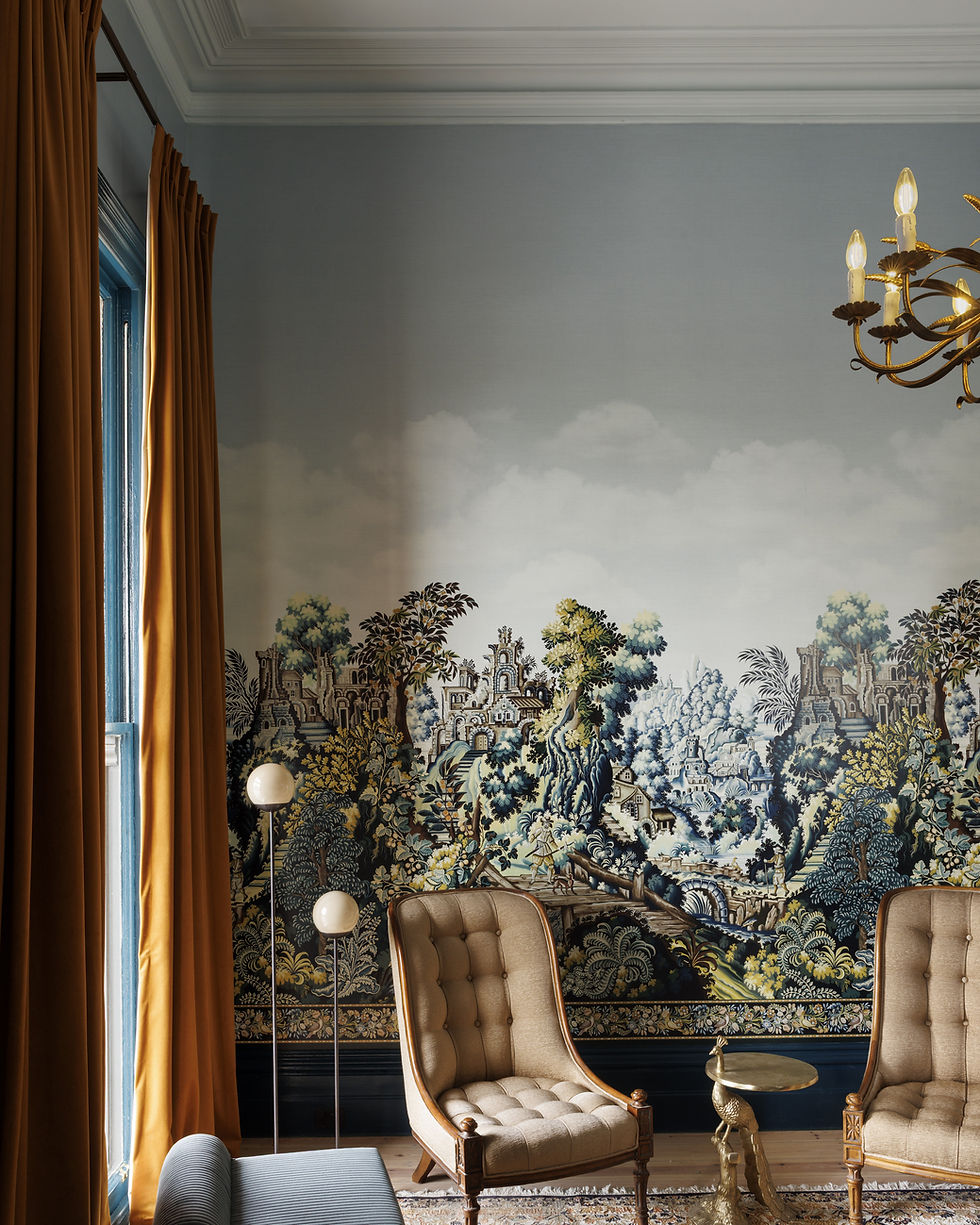
Despite decades of limited maintenance leading to deterioration of internal finishes, the entrance hall, with tessellated Minton tiles imported from England, and the dining room, featuring panelled ceilings of polished Russian pine, retained much of their original grandeur. rba sourced matching replacement Minton tiles, still produced in the UK, and worked carefully with the owner and contractor to ensure repairs throughout were as discrete as possible.

To function as a contemporary hotel, alterations to the building were also proposed. Key among these areas at the Queenscliff Hotel was the original bar cellar, impractical for its original use, and accessed only via a small floor hatch. Working closely with the owner, architect and Heritage Victoria, we identified this area as an opportunity for a new use. With the installation of a metal stair, and minimal intervention to original fabric, the space gained a new life as an intimate wine tasting room, providing public access to this previously concealed original part of the building.

The completed Queenscliff Hotel celebrates the history of the building, enabling it to continue to provide accommodation. As intended by the original owners and architects in 1887, it is “a magnificent hotel [...] a building that will do credit to Queenscliff.” (Ballarat Star, 11 October 1887, p2)



Architects: Molecule Studio
Builder: Built by Wilson
Photos: Dianna Snape


Comments