
The Yorkshire Sash: A Layered History of Sliding and Sash Windows
Updated: Jun 4
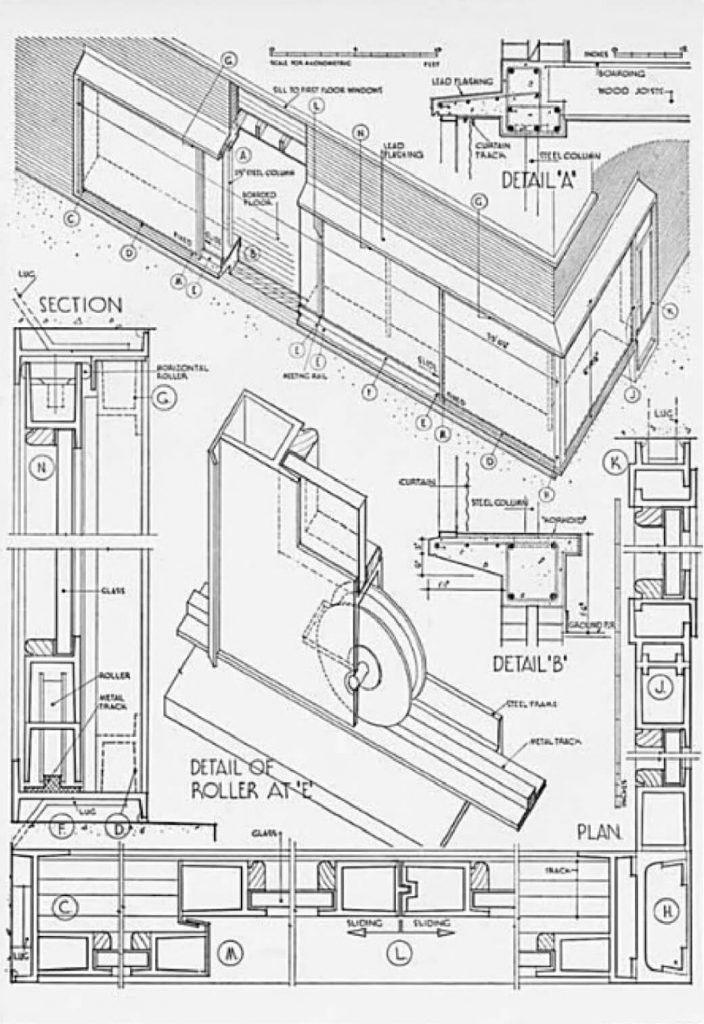
While the Yorkshire Sash is seen as a variant of the traditional sash window, the truth is a little more grey. The sash window is a technical marvel, containing a counter-balancing system of counterweights, lines and pulleys which allows for the window to stay open. Meanwhile, the slightly more humble Yorkshire Sash simply slides horizontally along a track or groove within the frame. The sash window came before the Yorkshire sash, but sliding windows have been around for much longer, so it’s all a bit chicken and egg: which just goes to show that history is often divergent and not linear.

The earliest evidence of sliding windows appears in France, in the 16th century, where they graced Parisian shops. By the mid-17th century, the vertical sliding window, the precursor of the sash window, made its home in domestic buildings in France.
The first Sash Windows
Did sash windows originated in France, the Netherlands, or the United Kingdom? The debate has raged. However now it is almost certain that they were developed in the aftermath of the Great Fire of London in about 1670, which saw a rapid construction phase to rebuild London. Building craftsmen from all over the UK and abroad flooded into the city, bringing together an unusually high concentration of skills operating in an extremely competitive environment. Simultaneously, cultural and technological exchange, particularly with the Netherlands and France was being encouraged.
From this pressure cooker of invention, the sash window was born: a window with a counterweight system allowing a frame to stay open at any vertical position.

It is almost certain that the English coined the term ‘Sash window’ to specifically refer to the counterweight and pulley assembly, first documented in 1671 referring to its installation in the Earl of Arlington’s lodgings at Whitehall. It differs from the German, Dutch and French terminologies which only translate to ‘sliding window’.
The Yorkshire Sash
After the invention of the sash, sliding windows became relatively uncommon compared to other window types. They were only employed in specific regional and vernacular contexts, with the Yorkshire sash being developed as a parallel to the sash window linage as early as ca 1705.

Compared to traditional sash windows, Yorkshire sashes were better suited to the proportions of rural cottages and farmhouses, which often had thick rubble and stone walls, and broad and low openings. They were also employed in secondary elevations, and circulation spaces.
Sash Windows and Yorkshire Sashes in Australia
By the time Australia was colonised, the sash window was a fully developed and standardised feature of Georgian architecture and was used in some of the country’s earliest colonial buildings. Yorkshire sashes were far less common, but surviving examples remain on some heritage places such as railway signal boxes and federation period train stations.

In 2024, rba was engaged to undertake historical research and conservation at Pastoria Homestead (H1179), which was developed between 1860 – 1889 and altered in the 1890s. The homestead is significant as an unusual arts and crafts house with some original Victorian elements. The conservation works addressed corrosion, rot and paint deterioration, cracks, and rising damp across a range of architectural elements including window assemblies, primarily casement and sashes, but also some sliding windows to the glazed verandah.

Conclusion
The Yorkshire Sash cannot be understood through a simple linear story. Its history lies between older European window assemblies, the development of the English sash window, and vernacular building practices. This layered understanding is essential when assessing significance and undertaking conservation. The varied window types found in contemporary construction today stand as a reminder of this layered history.
Sources:
Sash Windows, English Heritage
The origin of the sash window, H L Louw
The development of the window, H L Louw
A constructional history of the sash window c. 1670-c.1725, H L Louw, R Crayford
Pastoria Homestead (H1179) https://vhd.heritagecouncil.vic.gov.au/places/2823


The idea that the Yorkshire sash was basically the practical, humble cousin to the fancy crown slots Georgian sash window makes so much sense when you picture those thick-walled farmhouses. And finding out they've actually got surviving examples in Australian railway signal boxes and federation stations? That's the kind of niche heritage detail I absolutely love stumbling across. Makes me want to go for a walk and actually pay attention to the windows I pass every day.